
Why gas fees block user growth
Gas friction is the primary reason most Web3 applications fail to retain non-crypto-native users. When a transaction requires holding the native chain token (ETH, MATIC, BNB) just to pay for execution, you create a hard gate for adoption. Users who simply want to interact with a dApp are forced into a multi-step off-chain process: buying tokens, bridging them, and hoping they have enough balance to cover the fluctuating network costs.
This friction kills conversion. Every extra step introduces a point of failure where a user abandons the flow. For a developer, this means your product is competing not just against other apps, but against the inherent complexity of the blockchain infrastructure itself. The solution lies in abstraction, specifically through the ERC-4337 standard.
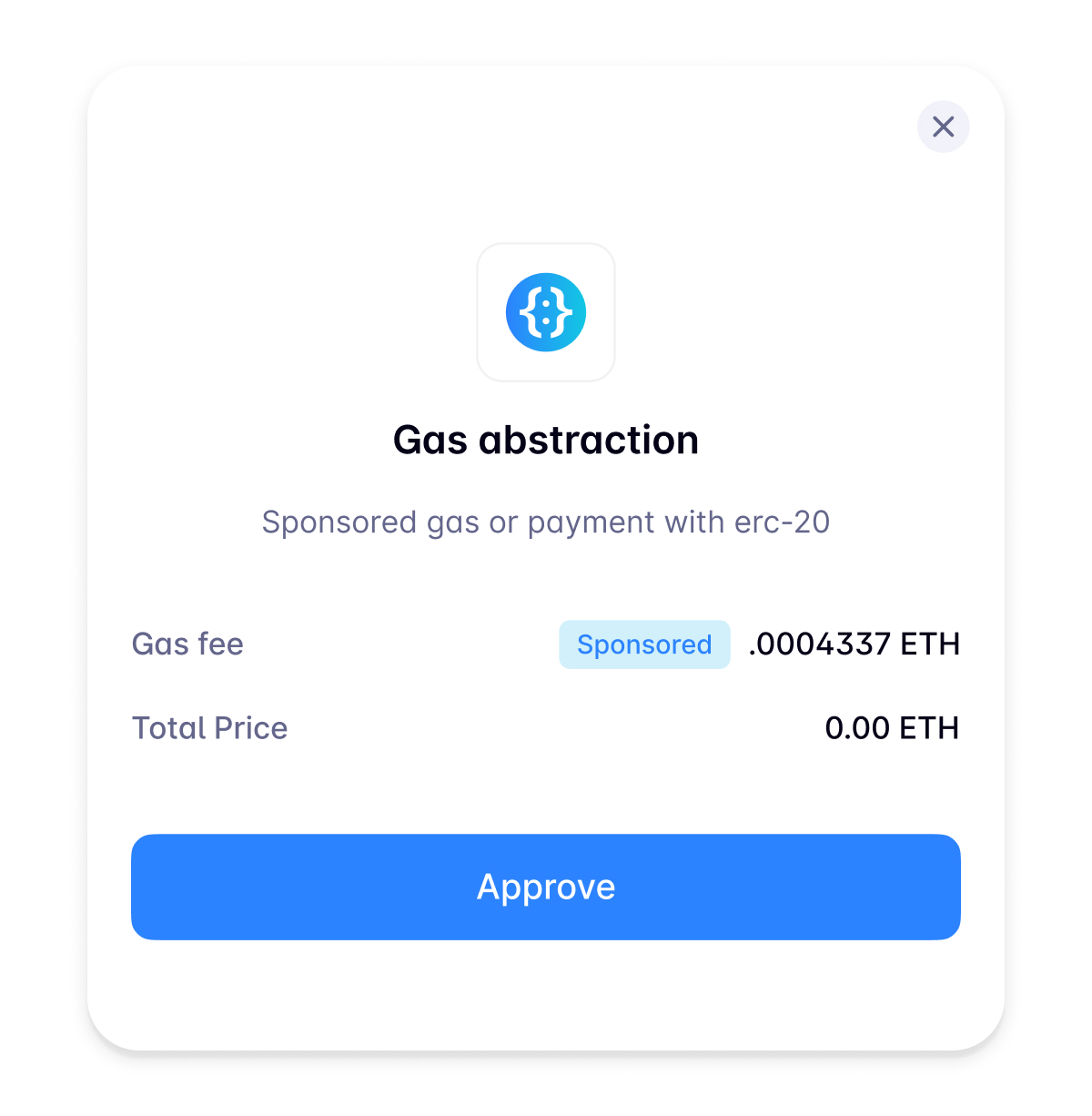
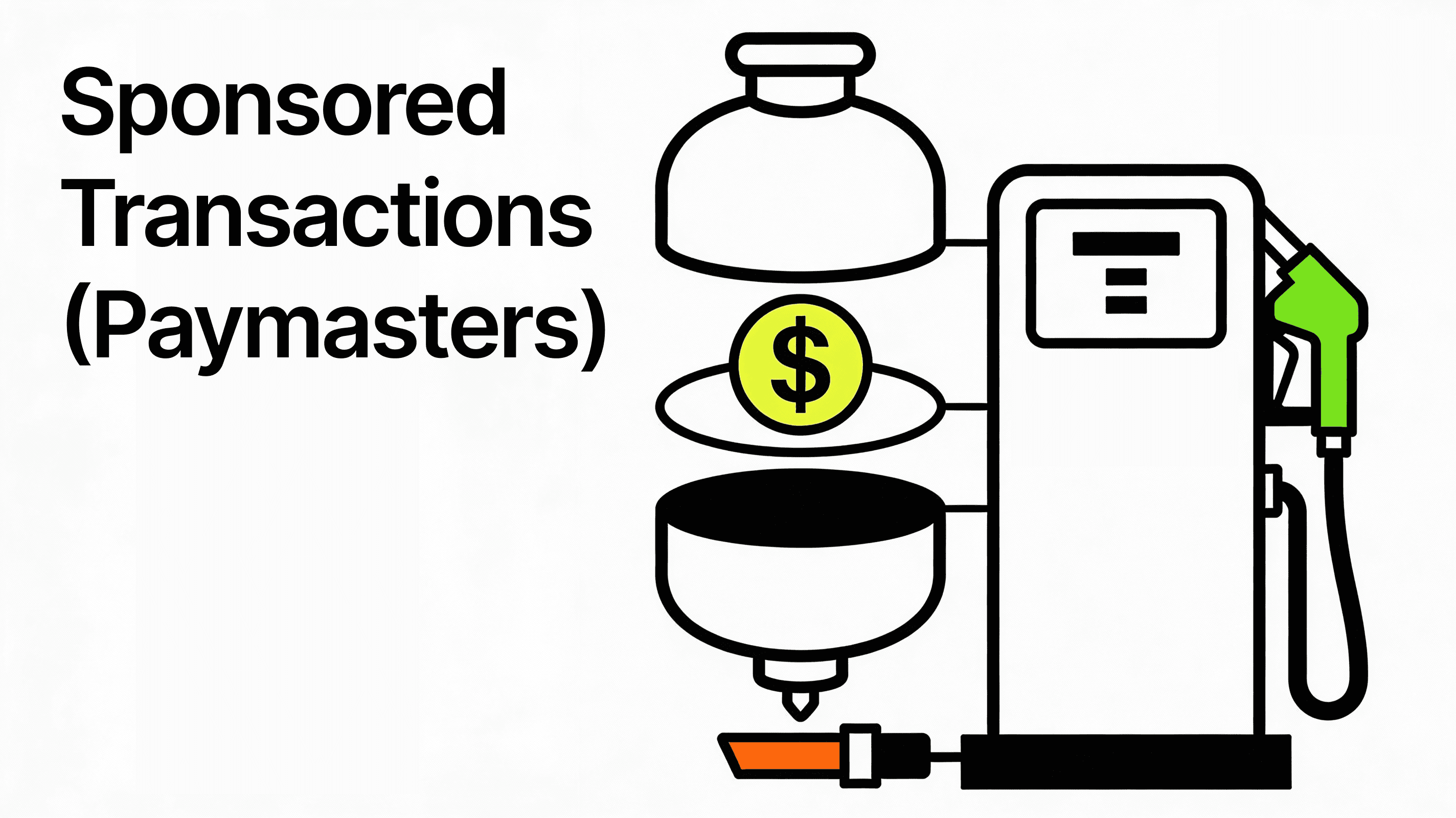
An ERC-4337 paymaster kit allows your dApp to sponsor user operations. Instead of the user paying gas in ETH, your application pays on their behalf. This enables critical UX improvements, such as allowing users to pay transaction fees in ERC-20 tokens or stablecoins, or simply absorbing the cost entirely as a customer acquisition expense. By decoupling the act of transacting from the act of funding the network, you remove the technical barriers that prevent mainstream growth.
Core Components of a Paymaster Kit
A paymaster kit for ERC-4337 is not a single smart contract but a coordinated stack of four distinct parts. Each component handles a specific layer of the gas sponsorship flow, from the user's initial click to the final on-chain settlement. Understanding how these pieces interact is essential for building a reliable gasless experience.
UserOperation
The UserOperation is the atomic unit of execution in the ERC-4337 standard. It is a structured object that contains all the data needed to execute a transaction, including the target contract, calldata, and the user's signature. Unlike traditional transactions, a UserOperation is not broadcast directly to the mempool. Instead, it is sent to the bundler, which bundles multiple operations together before submitting them to the EntryPoint contract. This separation allows for greater flexibility in how gas is paid and who pays it.
The Bundler
The bundler acts as the bridge between the user and the blockchain. It listens for UserOperation objects, aggregates them into batches, and submits them to the EntryPoint contract on behalf of the user. For a paymaster kit, the bundler is a critical infrastructure dependency. You must choose a bundler that supports your target chain and offers reliable uptime. Services like Alchemy and Coinbase offer robust bundler endpoints that handle the complex logic of operation ordering and inclusion.
The Paymaster Contract
The paymaster contract is the heart of the gasless experience. It is a smart contract that agrees to pay the gas fees for the UserOperation on the user's behalf. The contract implements the paymasterAndData field, which can include custom logic to verify conditions before sponsoring the transaction. For example, the paymaster might check if the user holds a certain NFT or if the transaction is within a specific time window. This contract must be deployed and registered with the EntryPoint to function correctly.
EntryPoint and Infrastructure
The EntryPoint contract is the core registry for all ERC-4337 operations. It validates UserOperation signatures, handles stake management, and ensures that paymasters have sufficient funds to cover gas costs. For developers, the EntryPoint is a fixed, audited contract that you do not deploy yourself. Instead, you interact with it through your paymaster and bundler. Reliable infrastructure, including node access and monitoring tools, is necessary to track the status of sponsored transactions and handle any failures gracefully.
Deploying the smart contract logic
Deploying a paymaster kit is the infrastructure layer that enables gasless transactions. Instead of users holding native tokens (ETH, MATIC) for gas, your contract pays on their behalf, abstracting the complexity of the blockchain. This section walks through selecting a kit, deploying the contract, and configuring the bundler to ensure transactions are processed correctly.
Choose your paymaster kit
Selecting the right kit depends on your existing wallet infrastructure. If you are already using Safe wallets, the Safe Protocol Kit offers native support for ERC-4337 paymasters, reducing integration friction. For broader compatibility, Alchemy provides a managed paymaster solution that handles the heavy lifting of sponsorship logic and bundler communication. Alternatively, you can build a custom ERC-4337 paymaster contract if you need fine-grained control over sponsorship rules, such as time-based limits or specific token allowances. MetaMask’s Smart Account infrastructure also supports ERC-20 paymasters, allowing users to pay gas fees in stablecoins like USDC, which can significantly improve user adoption.
Deploy the paymaster contract
Once you have selected your kit, you must deploy the paymaster smart contract to your target network. This contract acts as the escrow agent, holding funds (ETH or ERC-20 tokens) that will be used to pay bundlers. If you are using a custom implementation, ensure the contract inherits from the standard IPaymaster interface defined in ERC-4337. For managed solutions like Alchemy, you will typically deploy a wrapper contract that connects to their backend services. Fund the contract with enough native currency to cover initial transaction batches. Test this deployment on a testnet (Sepolia, Holesky) to verify that the contract can accept funds and interact with the entry point contract.
Configure the bundler
The bundler is the node that packages user operations (UserOps) and submits them to the blockchain. Your paymaster contract must be registered with a bundler that supports ERC-4337. If you are using a managed service like Alchemy or Stackup, the bundler configuration is often handled automatically when you initialize your SDK. For custom setups, you need to point your smart account client to a reliable bundler endpoint. Ensure the bundler supports the specific paymaster logic you implemented. For example, if your paymaster validates signatures based on ERC-20 token approvals, the bundler must be able to interpret these custom validation rules. Finally, verify the connection by sending a test transaction; if the bundler rejects the UserOp, check the paymaster’s validation signature and the contract’s allowance settings.
Evaluate existing wallet infrastructure. Use Safe Protocol Kit for Safe accounts, Alchemy for managed sponsorship, or build a custom ERC-4337 contract for full control. MetaMask Smart Accounts support ERC-20 paymasters for stablecoin gas payments.
Deploy the contract to your target network. Fund it with native currency for initial operations. If using a custom implementation, ensure it inherits from the standard IPaymaster interface and interacts correctly with the entry point contract.
Register your paymaster with an ERC-4337 compatible bundler (e.g., Alchemy, Stackup, or a custom node). Verify that the bundler can interpret your paymaster’s validation logic. Test with a live transaction to confirm successful UserOp submission.
Sponsorship models and ERC-20 gas
Your paymaster kit needs to handle two distinct payment flows: full sponsorship and ERC-20 gas payments. Understanding the difference is critical for balancing user experience against operational costs.
Full sponsorship
Full sponsorship is the simplest model. The dApp pays for all gas fees on behalf of the user. This creates a frictionless onboarding experience, as users don't need to hold ETH or native tokens to interact with your protocol. It is ideal for marketing campaigns, beta testing, or high-value actions where the dApp absorbs the cost to drive adoption.
However, this model exposes the dApp to direct financial risk. Every user operation drains the project's treasury. You must implement strict rate limiting or caps to prevent abuse, and you should monitor gas prices closely to avoid unexpected spikes in operational costs.
ERC-20 gas payments
ERC-20 gas payments allow users to pay transaction fees directly in stablecoins like USDC. This shifts the gas burden from the dApp to the user, creating a sustainable, self-funding model. Users retain control over their funds while still enjoying a seamless experience, as they don't need to bridge or swap assets beforehand.
This approach requires more complex implementation. The user must hold the supported ERC-20 token, and the paymaster contract must handle the token approval and transfer logic securely. According to MetaMask's documentation, this setup enables users to pay gas fees in USDC using Smart Accounts, significantly reducing friction for stablecoin-centric workflows [1].
Comparison
The following table compares the operational and user experience implications of each model.
| Feature | Full Sponsorship | ERC-20 Gas |
|---|---|---|
| Gas Cost | Paid by dApp | Paid by user |
| User Onboarding | No native token needed | Requires ERC-20 balance |
| Operational Risk | High (treasury drain) | Low (self-funding) |
| Complexity | Low | High (token handling) |
Common integration pitfalls to avoid
Building a gasless experience on ERC-4337 requires precision. The abstraction layer between the user and the blockchain is where most implementations fail. When a transaction reverts, the user sees an error, not a graceful fallback. The three most frequent points of failure are signature validation, bundler latency, and gas estimation.
Signature validation failures
The Paymaster must validate the user’s signature before submitting the entry point call. If the validation logic is too loose, you risk account hijacking. If it is too strict, you reject valid transactions. Most kits default to ECDSA (EIP-191), but ensure your implementation checks the sender address against the recovered signature. A mismatch here causes immediate rejection by the Bundler or the EntryPoint contract.
Bundler latency issues
Bundlers are third-party infrastructures. They are not part of your smart contract code. When a Bundler is slow or congested, the userOperation sits in the mempool. Your frontend must handle this state. Do not assume instant confirmation. Implement a polling mechanism or use WebSocket listeners to track the operation’s status. If you rely on synchronous calls, your UI will hang or timeout, leading to a poor user experience.
Insufficient gas limits
ERC-4337 transactions include both preOpGas and postOpGas. If your Paymaster underestimates the gas required for the postOp phase (which executes after the main logic), the transaction will revert. This is a common trap when handling complex logic or large data payloads. Always overestimate slightly in staging, then optimize based on mainnet data. Use the gasPrice and gasLimit fields from the Bundler’s response to calibrate your limits accurately.
Understanding Paymaster Infrastructure Costs
Running a paymaster kit shifts the burden of gas fees from the user to the dApp, but this convenience carries a distinct cost structure. You are essentially subsidizing the transaction lifecycle, which involves paying bundlers to include user operations in the mempool and covering the actual execution gas on-chain. While the user experience is seamless, the backend economics require careful monitoring to prevent your treasury from draining faster than your user acquisition.
The primary expense is the bundler fee, which fluctuates with network congestion. During high-traffic periods, bundlers prioritize operations with higher tips, meaning your paymaster must dynamically adjust the maxPriorityFeePerGas to ensure your sponsored transactions land. Beyond bundler fees, you pay for the execution gas. If you implement an ERC-20 paymaster, as detailed in MetaMask’s documentation, you also need to account for the overhead of swapping your reserve token (like USDC) into ETH to settle these on-chain costs.
To visualize the baseline cost of these operations, consider the current volatility of ETH gas prices. A spike in network demand can turn a cheap user operation into a costly one, directly impacting your cost-per-user metric.
Market context for 2026 suggests that infrastructure costs will remain a critical variable. Providers like Alchemy and Coinbase are competing to lower these barriers, with Coinbase offering up to $15K in gas credits on Base to help developers offset initial deployment costs. However, relying on credits is a temporary fix; a robust paymaster kit must include logic to handle cost fluctuations, such as capping subsidies per user or switching to cheaper L2s when mainnet fees exceed a set threshold.
Frequently asked questions about paymasters
Developers often confuse the ERC-4337 paymaster kit with traditional financial paymasters. The former is a smart contract module that sponsors user operations, while the latter is a corporate entity handling payroll or escrow.
Helpful gear
Use these product recommendations as a starting point, then choose the size, material, and price point that fit how you actually use the gear.

As an Amazon Associate, we may earn from qualifying purchases.
No comments yet. Be the first to share your thoughts!