
What a Paymaster Kit Does
A Paymaster Kit acts as the financial engine behind gasless user experiences in ERC-4337. It is a smart contract module that pays transaction fees on behalf of users, effectively decoupling gas payment from the user's native token balance. This separation allows applications to handle gas costs, enabling wallets to interact with dapps without requiring the user to hold ETH or other native chain tokens.
By handling fee payments, a Paymaster Kit enables developers to pay for gas in ERC-20 tokens or stablecoins rather than just native assets. This flexibility is critical for mainstream adoption, as it removes the friction of acquiring native tokens for every new blockchain interaction. The paymaster validates the user operation and covers the associated costs, ensuring the transaction is processed smoothly while the user remains focused on the application's core utility.
A Paymaster Kit is a smart contract module that pays transaction fees on behalf of users, enabling gasless interactions within ERC-4337 account abstraction.
This mechanism shifts the burden of gas management from the end-user to the application layer. According to Alchemy, this capability allows dapps and wallets to sponsor transactions, making blockchain interactions feel as seamless as traditional web services. The paymaster ensures due diligence and transaction legitimacy while managing the financial overhead, creating a bridge between complex blockchain mechanics and intuitive user interfaces.
Calculate Your Sponsorship Costs
Estimating the financial impact of gas sponsorship requires accounting for transaction volume, network congestion, and the specific payment model. ERC-4337 paymasters allow developers to sponsor transactions in native tokens or ERC-20 stablecoins. This flexibility shifts the cost burden from the user to the application, but it introduces variable expenses that depend on real-time market conditions.
To budget accurately, you must model both the base gas limit and the potential overhead for complex user operations. The calculator below helps you estimate monthly costs based on your projected transaction volume, average gas prices, and the token price if using an ERC-20 fee model.
This estimate assumes a constant gas price and does not account for network spikes. For ERC-20 sponsorship models, also consider the slippage and exchange rates when converting the native gas fee into your chosen stablecoin or token. Regularly reviewing these metrics against actual on-chain data will help you refine your sponsorship strategy and maintain a sustainable operational budget.
Choose Your Gas Payment Model
ERC-4337 Paymasters let dapps sponsor transactions, but the token you use to settle those fees changes the user experience and cost structure. You generally have two choices: paying with native tokens like ETH or STRK, or paying with ERC-20 tokens like USDC.
Paying with native tokens is the simplest path. The user holds the blockchain's base currency, so the paymaster can sponsor transactions without requiring the user to hold any other assets. This reduces friction for new users who might not yet have stablecoins. However, it exposes the dapp to the volatility of the native token's price when funding the paymaster's balance.
Paying with ERC-20 tokens, such as USDC, offers more predictable costs for both the user and the dapp. Users can pay gas with the same stablecoin they use for trading or payments. This requires the user to hold ERC-20 tokens, adding a small step to onboarding, but it stabilizes the gas expense. MetaMask Smart Accounts support this model, allowing users to pay gas in USDC directly.
The choice depends on your target audience. If you are building for mass adoption where holding multiple token types is a barrier, native token sponsorship lowers the entry threshold. If you are building for experienced users or financial applications, ERC-20 sponsorship provides cost certainty.
Native Token vs. ERC-20 Paymasters
The table below compares the two primary models based on complexity, user requirements, and cost stability.
| Feature | Native Token (ETH/STRK) | ERC-20 Token (USDC) |
|---|---|---|
| User Setup | None required | Must hold ERC-20 tokens |
| Cost Stability | Volatile | Predictable |
| Implementation | Simple | Moderate |
| Best For | New users, broad adoption | Experienced users, DeFi |
Recommended Tools
To implement these models, you will need development tools and documentation. The following resources help you integrate ERC-4337 paymaster functionality.


As an Amazon Associate, we may earn from qualifying purchases.
Deploy and Integrate the Kit
Integrating a Paymaster Kit into your application requires connecting the smart wallet provider to the ERC-4337 infrastructure. This process bridges the gap between user transactions and the network's entry point contract, allowing your application to sponsor transactions. You will deploy a Paymaster contract, configure it to interact with a bundler, and link it to a wallet provider like Safe or MetaMask.
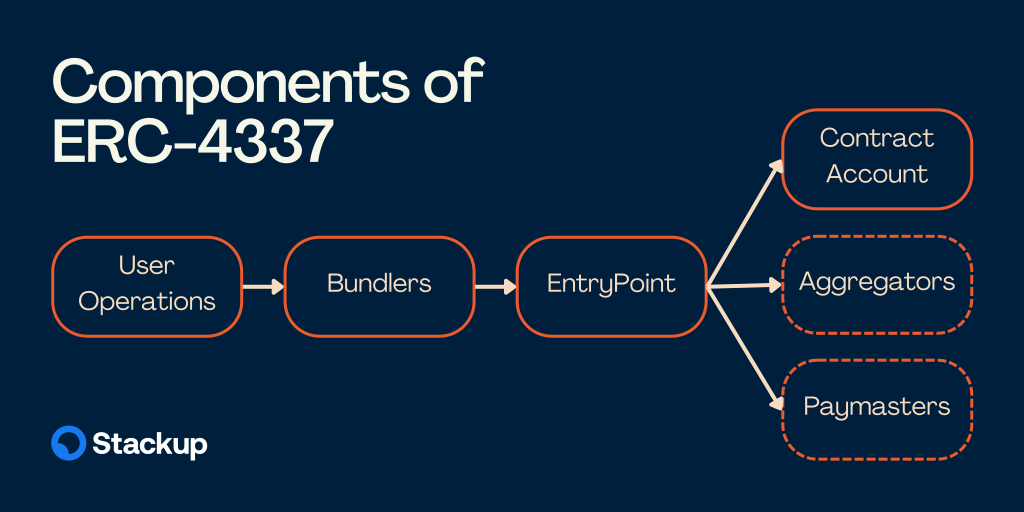
Start by deploying the Paymaster contract to your target network. This contract acts as the intermediary that pays gas fees on behalf of the user. You must configure the contract with your specific sponsorship rules, such as allowing payments in ERC-20 tokens or limiting the total amount sponsored per user. Ensure the contract is verified on the block explorer so you can interact with it via standard interfaces.
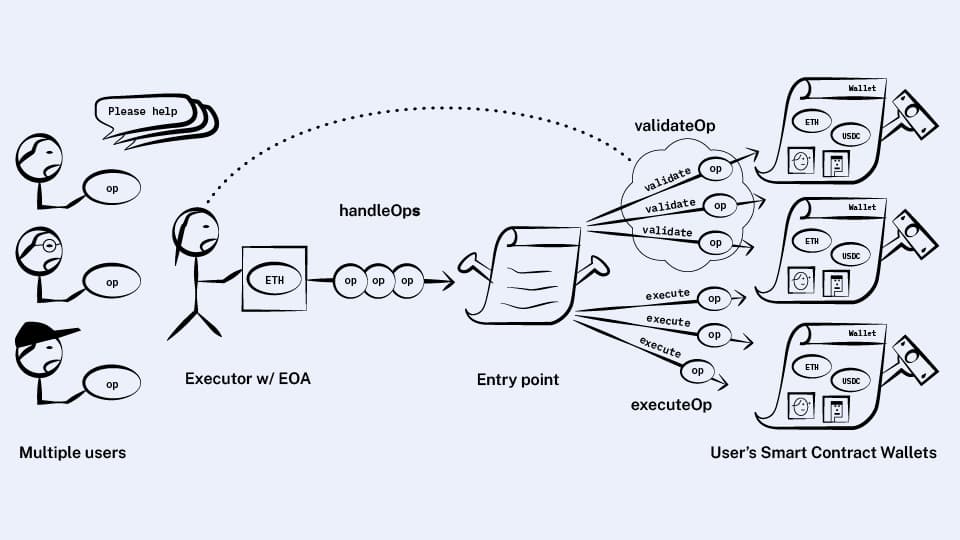
A Paymaster cannot function in isolation; it requires a Bundler to package and submit UserOperations to the Entry Point contract. Choose a reliable Bundler service that supports ERC-4337 and configure your Paymaster contract to communicate with it. This connection ensures that sponsored transactions are properly formatted, validated, and included in the blockchain mempool without requiring the user to hold native gas tokens.
Link your Paymaster to a smart wallet provider like Safe or MetaMask Smart Accounts. For Safe, you will use their Protocol Kit to configure the Paymaster as a sponsor for specific operations. For MetaMask, follow their tutorials to enable ERC-20 gas payments. This step ensures the wallet recognizes the Paymaster contract and automatically routes gas sponsorship requests to your deployed contract during transaction signing.
Before going live, test the integration on a testnet like Sepolia. Verify that transactions sponsored by your Paymaster are successfully submitted and executed. Check that the Paymaster contract correctly validates the UserOperations and that the Bundler accepts them. Use tools like the ERC-4337 playground or block explorers to monitor the transaction flow and ensure there are no validation errors or gas estimation issues.
Once integrated, your application can offer a seamless gasless experience. Users will interact with the wallet as usual, while your Paymaster handles the underlying gas costs according to your configured rules. This setup reduces friction for new users and can significantly improve adoption for your dApp.
Common Integration Pitfalls
Even with a robust Paymaster Kit, the margin for error remains thin. The most frequent cause of fund loss isn't a hack, but a logic flaw in how the paymaster validates incoming user signatures. If your smart contract fails to strictly verify that the userOp.signature matches the expected signer for the specific userOpHash, an attacker can replay valid transactions or forge approvals. Always cross-reference the signature against the ERC-4337 spec's strict verification requirements.
Another critical risk involves gas limit misconfiguration. If you set the gas cap too low, legitimate transactions will revert, leaving users stranded. Conversely, setting it too high exposes your contract to excessive gas consumption attacks, potentially draining your funding pool. Use the ERC-4337 gas estimation tools to dynamically calculate safe limits based on current network congestion.
Finally, ensure your paymaster doesn't inadvertently accept transactions from unauthorized accounts. Implement strict allowlists or role-based access controls if your paymaster supports multiple beneficiaries. A single misconfigured permission can allow an attacker to sponsor transactions for their own benefit, bypassing your intended economic model.
FAQs about ERC-4337 Paymasters
What is an ERC-4337 paymaster?
An ERC-4337 paymaster is a smart contract that allows decentralized applications (dApps) and wallets to sponsor transaction fees. Instead of requiring the user to hold native tokens like ETH for gas, the paymaster covers the transaction fees on their behalf, enabling gasless transactions or payments in ERC-20 tokens and stablecoins Alchemy.
How does a paymaster ensure transaction legitimacy?
The paymaster contract acts as a gatekeeper, verifying that the user operation meets specific criteria before sponsoring the gas. It performs due diligence to ensure the transaction is legitimate and safe, often checking for sufficient user allowance, valid signatures, or compliance with business rules before allowing the bundle to be included in the mempool.
What is the difference between a legal paymaster and a blockchain paymaster?
In legal contexts, a paymaster is a person or entity holding funds in trust for a transaction. In Web3, an ERC-4337 paymaster is a smart contract that automates this role. It removes the need for manual fund handling by programmatically sponsoring gas fees directly on-chain, improving UX while maintaining security through code rather than human oversight.
Is the paymaster model still relevant in 2026?
Yes. Paymasters remain a core component of ERC-4337 infrastructure, widely used to abstract gas complexity for end users. Major wallet providers and dApps continue to implement paymaster contracts to offer gas sponsorship, paymaster abstraction, and flexible gas payment options, making blockchain interactions feel more like traditional Web2 experiences Starknet.
No comments yet. Be the first to share your thoughts!