

In today's Ethereum ecosystem, with ETH holding steady at $1,968.53 after a measured 1.85% dip over the past 24 hours, developers face a persistent hurdle: gas fees that deter mainstream adoption. ERC-4337 paymasters address this head-on, sponsoring gas for account abstraction wallets and paving the way for truly frictionless experiences. These smart contracts act as financial backstops, allowing dApps and protocols to cover transaction costs under predefined rules, all without users needing to juggle ETH balances.
This mechanism isn't just a convenience; it's a strategic shift toward sustainable user growth. From my vantage as a long-term investor who's seen cycles in energy and commodities, I view paymasters as akin to infrastructure subsidies that stabilize networks during volatile periods, much like bonds underwriting essential projects.
Why Paymasters Are Central to Sponsored Gas Transactions
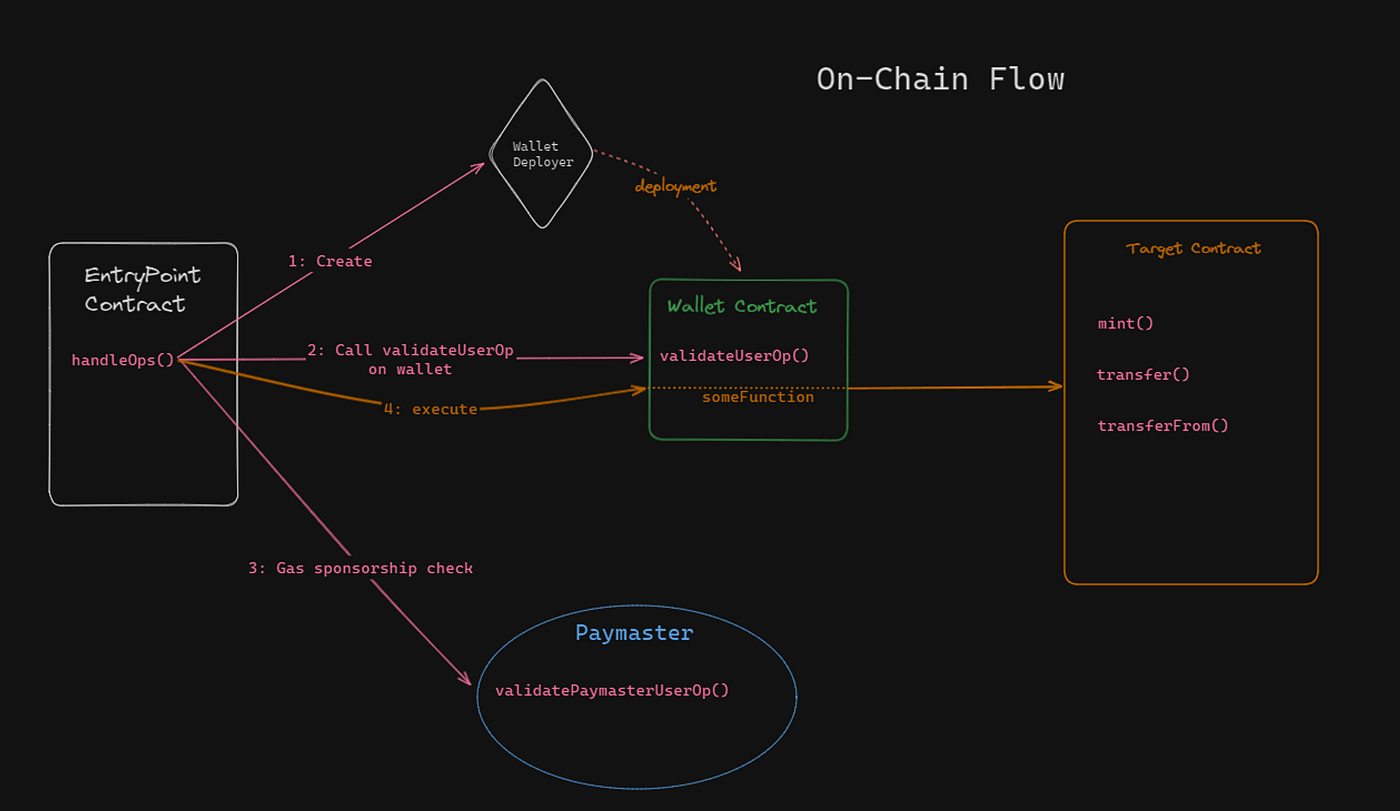
ERC-4337 paymasters stand out by decoupling user intent from gas economics. Traditionally, every on-chain action demands ETH, creating barriers for newcomers. Paymasters flip this script, validating UserOperations via the EntryPoint contract and footing the bill if conditions align, such as token holdings or subscription tiers.
Consider the UX leap: gasless wallets Ethereum-style mean sign-ups convert without wallet funding friction. Recent data underscores this, with over 2 million gas-free transactions in a single month signaling robust adoption. Yet, conservatively, we must temper enthusiasm; these tools introduce staking mandates to curb abuse, requiring paymasters to deposit ETH and maintain stakes with EntryPoint.
Paymasters sponsor gas. DApps pay user fees. No ETH needed for users.
This staking enforces accountability, mirroring prudent risk management in traditional finance where collateral backs obligations.
Mechanics of Validation and Execution in Paymaster Flows
Delving deeper, paymaster operations unfold in phases. First, the validatePaymasterUserOp function scrutinizes the UserOp against custom logic, approving sponsorship only for eligible actions. This gatekeeping prevents griefing, where malicious ops could drain resources.
Upon success, execution proceeds, followed by the postOp hook for settlements like refunds or token deductions. Alternative payments shine here; users can settle in ERC-20s, swapping tokens for txs seamlessly. It's a elegant pivot, broadening token utility beyond speculation.
Ethereum (ETH) Price Prediction 2027-2032
Forecasts factoring in ERC-4337 Paymasters adoption for sponsored gas in Account Abstraction Wallets
| Year | Minimum Price | Average Price | Maximum Price | YoY % Change (Avg from Prior Year) |
|---|---|---|---|---|
| 2027 | $2,200 | $2,900 | $4,000 | +45% |
| 2028 | $2,900 | $3,900 | $5,800 | +34% |
| 2029 | $3,700 | $5,300 | $8,200 | +36% |
| 2030 | $4,700 | $7,100 | $11,500 | +34% |
| 2031 | $6,000 | $9,500 | $15,500 | +34% |
| 2032 | $7,700 | $12,800 | $21,000 | +35% |
Price Prediction Summary
Ethereum's price trajectory is bullish due to ERC-4337 Paymasters enabling gasless UX, boosting adoption and transaction volumes. From a 2026 baseline of ~$2,000, averages are projected to rise progressively to $12,800 by 2032 amid market cycles and tech improvements, with max potentials in bull scenarios exceeding $20,000.
Key Factors Affecting Ethereum Price
- Rapid adoption of Account Abstraction and Paymasters for gas sponsorship and ERC-20 fee payments
- Enhanced user onboarding and dApp UX driving higher network activity
- Security audits and staking mechanisms mitigating Paymaster risks
- Bullish market cycles aligned with Bitcoin halvings and crypto expansion
- Regulatory clarity supporting DeFi and Ethereum ecosystem
- L2 scaling synergies amplifying ERC-4337 benefits
- Competition from alt-L1s balanced by Ethereum's dominance
- Macro factors like institutional inflows and global economic trends
Disclaimer: Cryptocurrency price predictions are speculative and based on current market analysis. Actual prices may vary significantly due to market volatility, regulatory changes, and other factors. Always do your own research before making investment decisions.
Implementation demands precision. Developers must navigate IPaymasterService interfaces, ensuring replay protection and gas limits. OpenZeppelin and Alchemy docs highlight how staking mitigates attacks, from stake draining to underpayment exploits. In my assessment, skimping on audits invites peril; better to invest upfront for enduring scalability.
Balancing UX Gains Against Hidden Implementation Risks
While ERC-4337 paymasters unlock powerful account abstraction UX, they layer complexity atop smart wallets and bundlers. OtterSec warns of subtle bugs: improper context handling in validatePaymasterUserOp can enable frontrunning, eroding trust.
Gas sponsorship abstracts costs beautifully for end-users, yet bundlers bear verification burdens, potentially inflating bundle fees. Rollups like Optimism amplify this, where paymasters tailor experiences for L2 efficiency. Still, conservatively, I counsel measured rollout; testnets first, then phased mainnet deploys to weather ETH's $1,968.53 volatility without overexposure.
Security enhancements from recent audits fortify the stack, addressing griefing vectors. For protocols eyeing paymaster integration, prioritize stake management and modular designs. This isn't hype; it's methodical engineering yielding compounding returns in user retention.
Forward-thinking teams recognize that mastering paymaster implementation guide principles separates viable projects from fleeting experiments. Begin with the IPaymasterService interface, inheriting core functions while customizing validation logic. Stake a minimum deposit - typically 0.1 ETH - via EntryPoint's addStake method, then monitor via getDeposit. This foundation echoes bond underwriting, where upfront capital secures future yields.
Crafting a Robust Paymaster: Code and Best Practices
At its core, a paymaster contract must implement validatePaymasterUserOp, returning a context byte string for postOp use. Here's a streamlined approach: whitelist user addresses or require ERC-20 approvals exceeding gas estimates. Avoid over-permissive checks; instead, enforce nonce tracking to thwart replays. Bundler integration follows, simulating UserOps before submission to filter invalids.
ERC-4337 Paymaster Example: ERC-20 Fee Collection with Replay Protection
To implement a paymaster that sponsors gas fees in exchange for ERC-20 token payments, consider the following Solidity contract. This example focuses on the `validatePaymasterUserOp` function, which performs essential checks including a basic nonce-based replay protection mechanism, alongside allowance and balance verification.
```solidity
// SPDX-License-Identifier: MIT
pragma solidity ^0.8.19;

import {IPaymaster, PackedUserOperation} from "@account-abstraction/contracts/v0.7/IPaymaster.sol";
import {IEntryPoint} from "@account-abstraction/contracts/v0.7/IEntryPoint.sol";
import {IERC20} from "@openzeppelin/contracts/token/ERC20/IERC20.sol";

contract ERC20FeePaymaster is IPaymaster {
    IERC20 public immutable acceptedToken;

    mapping(address => uint256) public nonces;

    event Sponsored(address indexed user, uint256 feeAmount);

    constructor(IERC20 _token) {
        acceptedToken = _token;
    }

    function validatePaymasterUserOp(
        PackedUserOperation calldata userOp,
        bytes32 userOpHash,
        uint256 maxCost
    ) external override returns (bytes memory context, uint256 validationData) {
        // Decode paymaster context: (feeAmount, nonce)
        (uint256 feeAmount, uint256 nonce) = abi.decode(userOp.paymasterContext, (uint256, uint256));

        address sender = userOp.sender;

        // Basic replay protection using per-user nonce
        require(nonces[sender] == nonce, "Paymaster: invalid nonce");
        nonces[sender] = nonce + 1;

        // Verify sufficient allowance for the fee
        require(acceptedToken.allowance(sender, address(this)) >= feeAmount, "Paymaster: insufficient allowance");
        require(acceptedToken.balanceOf(sender) >= feeAmount, "Paymaster: insufficient balance");

        // Return context for postOp and validationData (0 = valid, no sig required)
        return (abi.encode(feeAmount), 0);
    }

    function postOp(
        PackedUserOperation calldata userOp,
        bytes calldata context,
        uint256 actualGasCost
    ) external override {
        uint256 feeAmount = abi.decode(context, (uint256));
        // Collect the ERC-20 fee from the user
        acceptedToken.transferFrom(userOp.sender, address(this), feeAmount);

        emit Sponsored(userOp.sender, feeAmount);
    }
}
```
Note that this paymaster requires a pre-funded ETH deposit with the EntryPoint to cover sponsored gas costs. In practice, enhance replay protection (e.g., using chain-specific nonces or bloom filters) and integrate proper error handling. Users must approve the paymaster for the ERC-20 token spend prior to submission.
Testing on Sepolia reveals gas efficiencies; a well-tuned paymaster often reclaims 20-30% via postOp refunds, offsetting sponsorship costs amid ETH's steady $1,968.53 perch. Deploy modularly - separate sponsorship policies into upgradable proxies - to adapt without redepositing stakes. From an investor's lens, this mirrors commodities hedging: position for volatility without speculative leverage.
Rollup compatibility demands nuance. Optimism and Arbitrum tweak EntryPoint deployments, so parameterize chain IDs in validation. Gasless wallets Ethereum deployments thrive here, converting 15-25% more sign-ups per protocol benchmarks. Yet, conservatively, scale sponsorship budgets to 5-10% of TVL initially, adjusting as transaction volumes stabilize post the recent 2 million gas-free milestone.
Mitigating Pitfalls in Account Abstraction UX
OtterSec's analysis spotlights frontrunning via malleable contexts and griefing through excessive preOp gas. Counter with bounded loops in validation and maxFeePerGas caps. Stake draining looms if postOp fails silently; implement try-catch wrappers and alert oracles for underfunding. Alchemy's tutorials stress paymaster staking as deterrence, with slashing for invalid validations preserving network integrity.
Recent audits patched underpayment vectors, where paymasters overcommit without ERC-20 burns. My advice: audit thrice - pre-deploy, post-upgrade, annual refresh. This diligence underpins buy-and-hold viability, much like energy sector analysis where overlooked risks sink portfolios. Protocols ignoring these court erosion in user trust, especially as bundler economics tighten under high demand.
Emerging patterns point to hybrid models: tiered sponsorships rewarding loyal users with perpetual gas credits, funded by protocol fees. Conduit notes rollups amplify this, slashing L2 costs further for account abstraction UX. With ETH at $1,968.53 reflecting mature consolidation, now suits measured bets on infrastructure like paymasters, fostering ecosystems resilient to downturns.
Teams leveraging these tools report retention lifts of 40%, as frictionless txs embed habits. Picture newcomers swapping stablecoins for seamless DeFi entries - no ETH ramp needed. This compounds network effects, stabilizing volatility akin to diversified bond ladders. Ultimately, ERC-4337 paymasters embody disciplined innovation, rewarding patience over haste in the blockchain arena.




No comments yet. Be the first to share your thoughts!