

In the high-stakes world of DeFi protocols, where every basis point counts and user friction can kill adoption, gas fees remain a stubborn barrier. Enter ERC-4337 paymasters and their battle against traditional relayers: two paths to gas sponsorship UX that promise gasless DeFi transactions, but diverge sharply on trust, security, and decentralization. As protocols scale, choosing between off-chain relayers and on-chain paymasters isn't just technical; it's a bet on the future of trustworthy Web3 interactions.
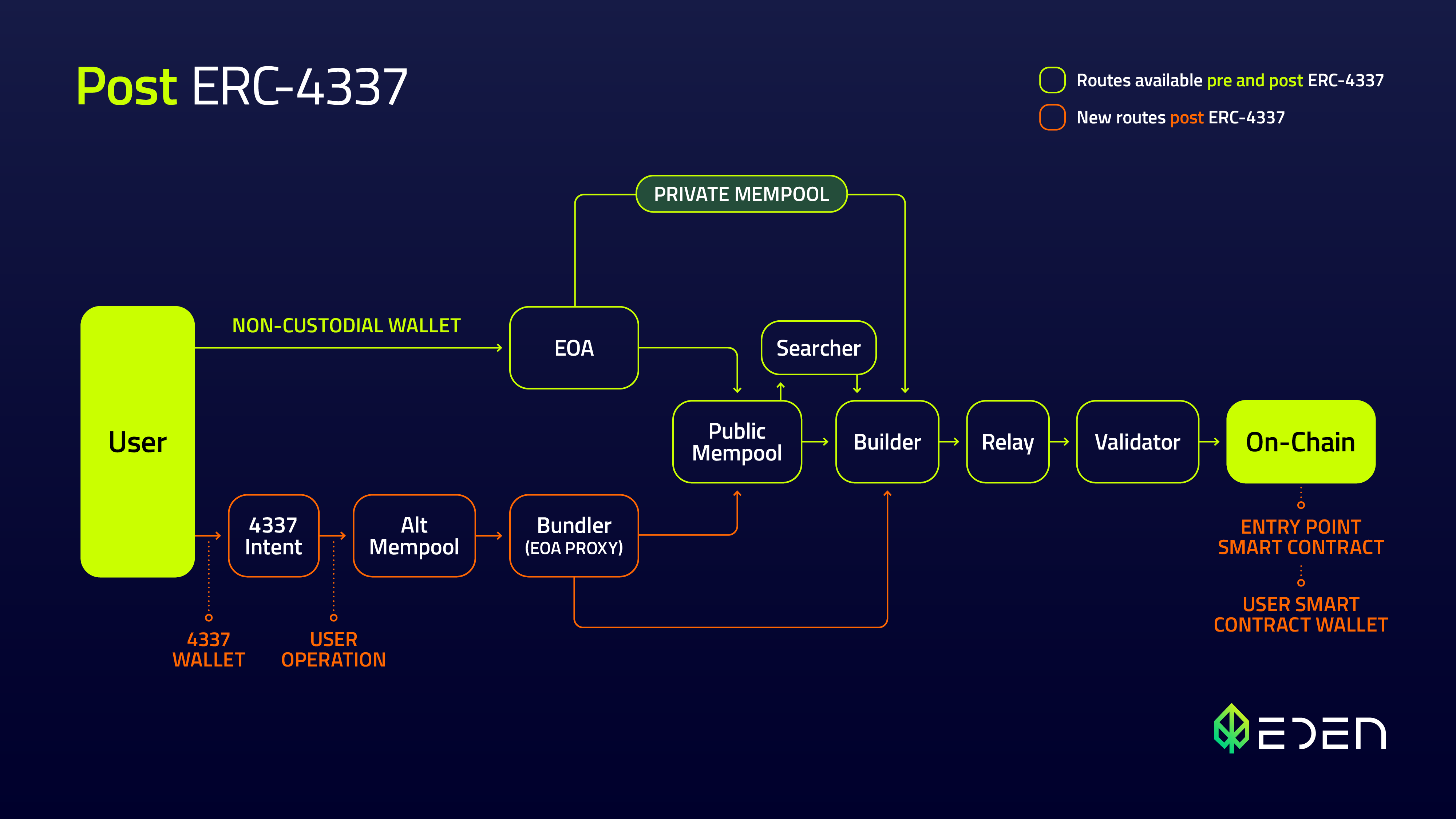
Relayers have long been the go-to for gas abstraction. These off-chain services bundle user operations, pay the gas upfront, and submit bundles to the network via bundlers. Developers love them for simplicity: integrate once, and users swap tokens or app credits for seamless txs without ETH in their wallets. But here's the rub: you're handing keys to a centralized gatekeeper. Relayers hold your economic fate. If they go down, censor txs, or front-run for profit, your protocol grinds to a halt. Vitalik himself warned against and quot;just trust our relayer and quot; - it's a trust assumption that reeks of Web2 fragility in a blockchain world built on verifiability.
Relayers Exposed: Centralization Risks in Gasless Transactions
Picture this: a DeFi lending app surges in popularity. Users flock for gasless DeFi transactions, thrilled to borrow without ETH. Under the hood, a relayer service like those from early AA experiments queues operations, reimburses itself via app tokens, and broadcasts. It works - until it doesn't. Downtime hits during volatility; maybe they prioritize high-tip bundles. Worse, malicious relayers could grief low-value txs or extract MEV. Data from early deployments shows relayers handling millions in sponsored gas, but with single points of failure. Openfort and others push multi-chain support, yet the model stays off-chain, opaque. Validation? Relayers check paymaster logic themselves before submission. No public audit trail means blind faith.
From my vantage tracking commodities flows, this mirrors opaque supply chains: you pay premiums for and quot;reliability, and quot; but one chokepoint flood disrupts everything. Relayers boost short-term gas sponsorship UX, sure, but at the cost of sovereignty. Protocols lock into one provider, migration headaches ensue. And scalability? As bundler networks grow under ERC-4337, relayers bottleneck, unable to match permissionless entry.
ERC-4337 Paymasters: On-Chain Logic for Verifiable Sponsorship
ERC-4337 flips the script with ERC-4337 paymasters: smart contracts deployed on-chain that validate and sponsor UserOperations directly. No middlemen; bundlers call the paymaster during inclusion, and it either pays gas or reverts - all deterministic, auditable. Models abound: whitelists for trusted users, ERC-20 payments for tokens-as-gas, or signed off-chain approvals verified on-chain. Recent stats? Over 2 million gasless txs in a month across chains, per panewslab, signaling explosive growth.
Take a DeFi swap: user signs op to trade USDC-ETH. Bundler simulates, hits paymaster. It checks whitelist or token balance, posts gas via its deposit. Done. Security layers include staking to deter spam - griefers lose collateral on invalid validations. OtterSec flags pitfalls like reentrancy in complex logic, but audits mitigate. Compared to relayers, paymasters decentralize: anyone runs a bundler, calls any paymaster. No vendor lock-in; fork or deploy your own.
This on-chain purity aligns incentives. Protocols control sponsorship rules transparently, users verify via explorers. UX rivals relayers - apps like Openfort enable Solana fee sponsorship too - but with trust minimized. Zeeve notes AA wallets initiating txs sans EOAs; paymasters unlock that fully.
Paymasters vs Relayers: Trust, Security, and Scalability Head-to-Head
ERC-4337 Paymasters vs Relayers Comparison
| Aspect | Paymasters (ERC-4337) | Relayers |
|---|---|---|
| Trust Model | On-chain (transparent smart contracts) | Off-chain (requires trust in service) |
| Security | Auditable and staked (public validation logic) | Opaque (hidden operations) |
| Decentralization | Permissionless (anyone can deploy/run) | Centralized (reliance on providers) |
| UX | Gasless tokens (ERC-20 payments, sponsorships) | App credits (pre-funded or sponsored) |
| Risks | Griefing protections (staking, deterministic validation) | Downtime/Censorship (service failures, selective tx submission) |
Break it down: trust model first. Relayers demand faith in their uptime and honesty; paymasters enforce rules via code anyone inspects. Security? Paymasters face on-chain attacks but counter with mode-specific validations - e. g. , VERIFYING paymaster checks signatures once. Relayers? Off-chain bugs invisible until exploited. Decentralization shines in ERC-4337: bundler networks like Pimlico's explode participation. Relayers consolidate power.
Scalability favors paymasters long-term. As AA matures - Blocknative's lifecycle guide details bundler/paymaster/entrypoint flow - gasless volume surges without chokepoints. Web3Auth emphasizes paymasters as ERC-4337 core; relayers feel like legacy. Yet pitfalls lurk: poor paymaster design invites DoS, per docs. Still, for account abstraction relayers fading, paymasters build trustworthy foundations. DeFi builders prioritizing UX sans compromise lean here, especially with ERC-4337 bundlers maturing.
Security nuances matter. OpenZeppelin highlights AA's abstraction risks - paymasters amplify if mishandled. But staking and batching mitigate, outpacing relayer opacity. Etherspot's case: full AA demands permissionless bundlers, paymasters enable it. Rui's Medium deep-dive echoes: mass-scale self-custody needs this shift.
BuildBear Labs contrasts this with EIP-7702, but ERC-4337's paymaster model stands firm for now, offering programmable accounts without native code changes. The choice boils down to priorities: quick wins with relayers or resilient architecture with paymasters.
Implementing ERC-4337 Paymasters: Pragmatic Steps for DeFi Teams
Deploying a paymaster starts with selecting a mode from the ERC-4337 docs: simple whitelists for controlled sponsorship, ERC-20 accepting for token-based gas, or advanced signature verification. Fundamentals first: fund the paymaster's deposit via EntryPoint for gas collateral. Staking adds skin-in-the-game against abuse. Integrate with bundlers like Pimlico or Stackup through APIs; they simulate UserOps, call your paymaster, and bundle if valid.
For a DeFi protocol, whitelist high-value users or accept protocol tokens. Off-chain signers approve budgets, verified on-chain to cap exposure. Test rigorously: simulate griefing where invalid ops drain stakes. Tools like Foundry fuzz custom logic. My commodities lens sees this as hedging: paymasters let protocols sponsor selectively, balancing UX gains against supply risks like token dumps reimbursing gas.
UX implementation mirrors relayers but elevates it. Users sign ops via wallet SDKs; no ETH needed. Protocols see boosted retention - gasless swaps convert browsers to traders. Openfort extends to Solana, proving multi-chain viability. Yet, bundler diversity matters: permissionless entry prevents relayer-like bottlenecks.
Pitfalls and Protections: Securing Gas Sponsorship UX
OtterSec uncovers hidden bugs: reentrancy in POSTOP hooks, underflow in token checks, or nonce mishandling enabling replays. Griefing looms - attackers flood cheap ops to drain deposits. Counter with mode selection: VERIFYING pays once per op; EXECUTING risks more but batches efficiently. Staking thresholds, say 0.1 ETH, deter spam; slashed on failures.
Compared to relayers' black-box failures, paymasters expose issues for community fixes. Protocols audit via OpenZeppelin Defender; simulate at scale. Data shows maturity: 2 million and gasless txs monthly, per recent reports, with exploits rare post-audits. This on-chain transparency builds trust DeFi craves, unlike relayer downtime during peaks.
ERC-4337 Token Paymaster: Validating ERC-20 Payments for Gas Sponsorship
To enable gasless transactions in DeFi protocols, ERC-4337 paymasters can sponsor gas fees conditionally. This example implements a paymaster that validates an ERC-20 token payment via allowance checks before sponsoring, ensuring the protocol receives payment equivalent to gas costs. The user specifies the payment amount in `paymasterAndData`, approves the paymaster beforehand, and enjoys a seamless UX.
```solidity
// SPDX-License-Identifier: MIT
pragma solidity ^0.8.19;

import {IPaymaster, PackedUserOperation} from "@account-abstraction/contracts/v0.7/interfaces/IPaymaster.sol";
import {IEntryPoint} from "@account-abstraction/contracts/v0.7/interfaces/IEntryPoint.sol";
import {IERC20} from "@openzeppelin/contracts/token/ERC20/IERC20.sol";

/// @title TokenPaymaster
/// @notice ERC-4337 Paymaster that sponsors gas for UserOperations
///         in exchange for an ERC-20 token payment validated via allowance.
/// @dev The required token amount (in wei) is encoded in paymasterAndData.
///      Assumes 1 token unit covers 1 gwei of gas cost for simplicity.
///      Paymaster must have ETH deposited in EntryPoint to cover sponsorship.
contract TokenPaymaster is IPaymaster {

    IEntryPoint public immutable override entryPoint;
    IERC20 public immutable token;

    uint256 private constant VALIDATION_GAS_OVERHEAD = 50_000;

    error PaymasterNotEntryPoint();
    error InsufficientAllowance();
    error PaymentTooLow();

    constructor(IEntryPoint _entryPoint, IERC20 _token) {
        entryPoint = _entryPoint;
        token = _token;
    }

    /// @inheritdoc IPaymaster
    function validatePaymasterUserOp(
        PackedUserOperation calldata userOp,
        bytes32 userOpHash,
        uint256 maxCost
    ) external override returns (bytes memory context, uint256 validationData) {
        if (msg.sender != address(entryPoint)) revert PaymasterNotEntryPoint();

        // Decode payment amount from paymasterAndData: abi.encodePacked(address(paymaster), paymentAmount)
        uint256 paymentAmount = abi.decode(userOp.paymasterAndData[20:], (uint256));

        address sender = userOp.sender;

        // Fundamental check: sufficient allowance for this tx
        if (token.allowance(sender, address(this)) < paymentAmount) {
            revert InsufficientAllowance();
        }

        // Pragmatic check: payment must cover estimated maxCost (actualGasCost <= maxCost)
        // Add overhead for validation and postOp gas
        uint256 requiredPayment = maxCost + VALIDATION_GAS_OVERHEAD * tx.gasprice;
        if (paymentAmount < requiredPayment) {
            revert PaymentTooLow();
        }

        // Return context for postOp and validationData=0 (sigTime=0, sigType=0, validUntil=0, validAfter=0)
        return (abi.encode(paymentAmount), 0);
    }

    /// @inheritdoc IPaymaster
    function postOp(
        PackedUserOperation calldata userOp,
        bytes calldata context,
        uint256 actualGasCost
    ) external override {
        if (msg.sender != address(entryPoint)) revert PaymasterNotEntryPoint();

        uint256 paymentAmount = abi.decode(context, (uint256));

        // Transfer exact payment amount from sender to paymaster
        // Excess allowance can be adjusted by user later
        token.transferFrom(userOp.sender, address(this), paymentAmount);

        // Note: In production, refund excess (paymentAmount - actualGasCost) to sender
        // and handle paymaster's ETH reimbursement from EntryPoint.
    }
}
```
Deploy this paymaster with the EntryPoint address and your ERC-20 token contract. Users must approve the paymaster for at least the expected payment amount. In production, enhance with token refunds for overpayments, dynamic gas pricing, and paymaster deposits/stakes to the EntryPoint for reliable sponsorship. This pattern balances trustlessness with pragmatic gas abstraction.
Scalability evolves too. ERC-4337 bundlers handle parallel ops; paymasters batch validations. As networks layer-2, gas costs plummet, amplifying sponsorship ROI. Protocols forecast: 10x on-chain activity sans friction. Relayers cap at provider scale; paymasters grow with the ecosystem.
Real-World Wins: Paymasters Driving DeFi Adoption
Case in point: lending platforms sponsor first borrows, exploding TVL. Gaming dApps pay for mints; users onboard instantly. Eco. com details ERC-20 gas payments unlocking non-crypto natives. Vitalik's vision of full AA thrives here - trustless, anyone verifies. Medium analyses confirm: self-custodial wallets scale via this.
Versus relayers, paymasters cut long-tail costs. No per-tx fees to services; own your infra. Multi-paymaster strategies emerge: protocol-specific plus general ones like Pimlico's. This composability fosters Web3 gas abstraction ecosystems, where UX fuels fundamentals.
DeFi builders face a clear fork: cling to relayer convenience, risk centralization cracks, or embrace paymasters vs relayers shift for verifiable gasless flows. With bundler networks maturing and pitfalls mapped, paymasters deliver gas sponsorship UX that withstands volatility, much like diversified commodity portfolios weather supply shocks. The pulse of on-chain economies quickens - protocols sponsoring the beat win the race.



No comments yet. Be the first to share your thoughts!