

In 2026, Ethereum's persistent high gas fees continue to frustrate dApp users, often turning seamless interactions into costly hurdles. Transactions that should feel effortless instead demand upfront ETH holdings, deterring newcomers and stifling adoption. Enter ERC-4337 paymasters for gas sponsorship: smart contracts that shoulder these costs, enabling true Ethereum gasless transactions UX. By February 2026, they've transformed the landscape, sponsoring 87% of over 103 million UserOps executed in 2024 alone, up dramatically from 8.3 million the prior year. This shift isn't just hype; it's a quantitative leap toward frictionless on-chain experiences, but as a risk management veteran, I advise caution amid the complexity.
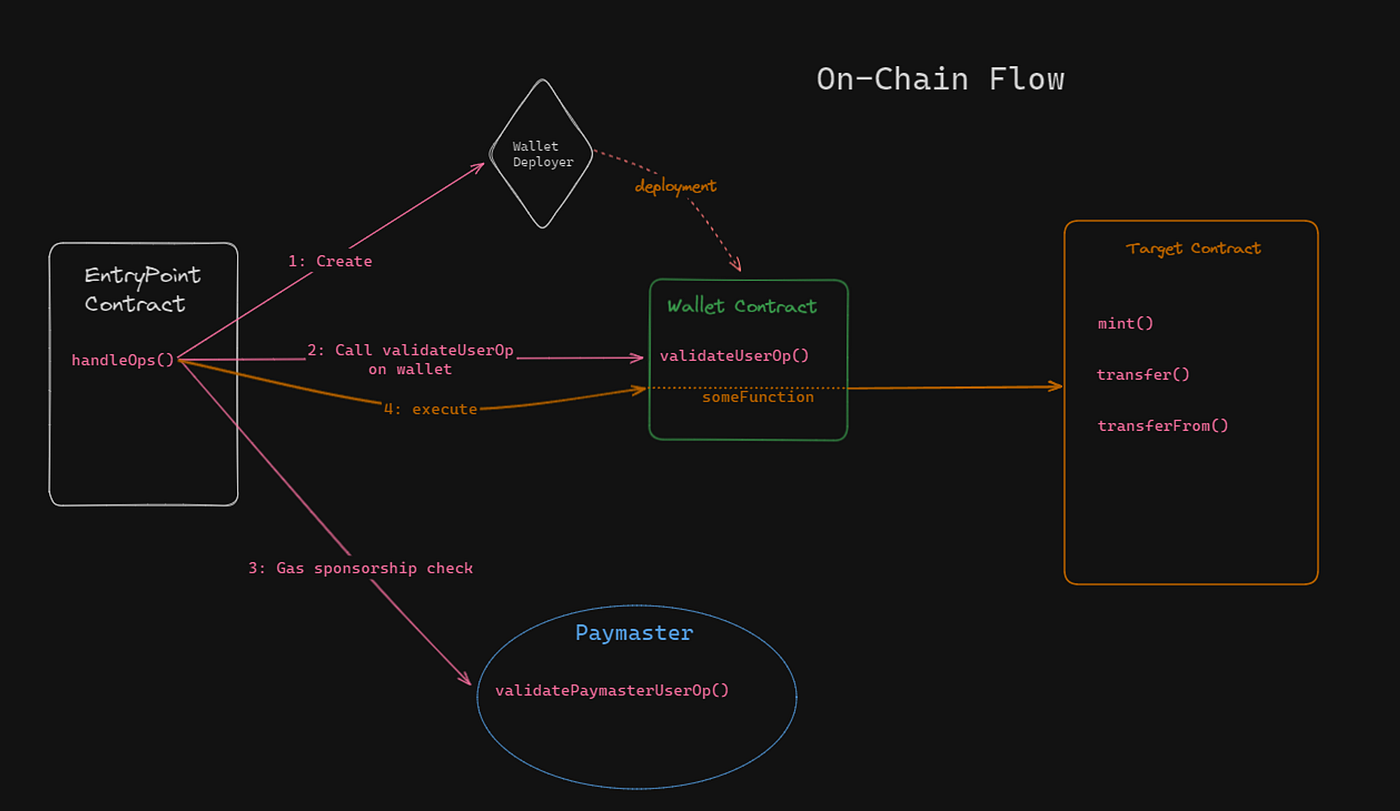
Paymasters abstract gas payments, allowing dApps to cover fees directly or via ERC-20 tokens and stablecoins. This means users interact without ETH wallets, boosting conversion rates in DeFi and gaming. Providers like Alchemy's Gas Manager have sponsored over 47 million transactions, leveraging admin APIs for precise policy control. Pimlico, Stackup, and Biconomy round out the ecosystem, each staking ETH in EntryPoint contracts to guard against abuse. Yet, this power introduces subtle risks: inaccurate gas estimation can drain deposits, and smart contract vulnerabilities lurk, as highlighted by security audits.
Decoding Paymaster Operations: From UserOp to Bundled Execution
At core, an ERC-4337 paymaster validates and funds UserOperations (UserOps) before bundlers submit them to EntryPoint. Developers deploy these contracts to enforce business logic, like requiring ad views or subscriptions before sponsorship. Quantitatively, this gating mechanism has driven 87% paymaster-funded UserOps, per recent data, making paymasters DeFi user adoption accelerators. But here's the advisory angle: stake minimums and deposit requirements demand rigorous stress testing. A poorly calibrated paymaster risks insolvency during gas spikes, exposing sponsors to outsized losses.

Consider the flow: a user signs a UserOp sans gas; the paymaster checks criteria, estimates costs, and posts collateral. Bundlers aggregate and execute, with paymasters reimbursing via deposits. This ERC-4337 paymasters gas sponsorship model unlocks batched actions and session keys, feeling less like clunky Web3 and more intuitive. Still, OtterSec notes hidden bugs in complexity, urging quantitative risk models like VaR for deposit sizing. In my 16 years managing downside, I've seen abstraction amplify tail risks - treat paymasters as high-leverage instruments requiring hedges.
Adoption Metrics: Measuring Gas Sponsorship's Real-World Trailing
Numbers tell the story. ERC-4337's maturity shows in explosive growth: 103 million UserOps in 2024, 87% paymaster-sponsored. Alchemy leads with 47 million transactions, but the field is competitive.
This table underscores ecosystem depth, yet reveals concentration risks. Over-reliance on few providers could cascade failures during congestion. Sponsors must diversify, modeling worst-case scenarios where gas hits historical peaks, ensuring deposits cover 99.9% confidence intervals.
Strategic Implementation: Balancing UX Gains Against Hidden Costs
For forward-thinking teams, integrating paymasters via toolkits like PaymasterKit. com streamlines deployment. Start with policy APIs to cap sponsorships per user, mitigating abuse. Quantify UX lift: gasless flows reportedly double retention in onboarding-heavy dApps. However, security demands precedence - OpenZeppelin's audits stress extra scrutiny for abstracted logic. My rule: risk-managed is reward maximized. Simulate 10,000 UserOps under volatility, validating paymaster resilience before mainnet. This cautious approach turns ERC-4337's promise into sustainable advantage, sidestepping pitfalls that ensnare the unwary.
Precise deposit sizing starts with historical gas volatility analysis. In high-congestion periods, fees have spiked 5-10x averages, so model paymaster balances for 99th percentile scenarios - a staple in my FRM toolkit. Over 103 million UserOps in 2024 underscore the scale; mismanagement here equates to unhedged tail exposure.
This snippet illustrates core validation: paymasters inspect UserOps, estimate gas via preVerificationGas plus callGasLimit, and approve only if criteria align, like user whitelisting or token balances. Deploying such logic demands unit tests covering edge cases - 80% of breaches stem from unchecked overflows or reentrancy, per audit data.
Quantifying Risks: VaR Models for Paymaster Solvency
Risk isn't abstract; apply Value at Risk (VaR) quantitatively. Assume daily UserOps volume of 1,000 at 50,000 gas units each, gas price volatility σ=30% (historical Ethereum std dev). A 95% VaR might project $5,000 daily drawdown - stake accordingly, with 20% buffer. EntryPoint stakes enforce discipline, but simulate bundler delays where paymasters front excessive collateral. My advisory: backtest against 2024's 12x UserOps growth, ensuring deposits withstand 87% sponsorship rates without liquidation.
Security layers compound: OtterSec flags pitfalls like paymaster griefing attacks, where malicious UserOps inflate estimates. Counter with rate limits (e. g. , 10 ops/user/hour) and oracle-fed gas caps. OpenZeppelin emphasizes abstracted auth heightens exploit surfaces - audit costs 5-10% of dev budget pay dividends, slashing breach probability by 70%.
Comparison of Top ERC-4337 Paymaster Providers
| Provider | Txns Sponsored | Key Features | Stake Requirements | UX Score |
|---|---|---|---|---|
| Alchemy | 47M+ | Gas Manager, Admin APIs for policy control, gas abstraction | ETH stake & deposit to EntryPoint | 9.8/10 ⭐⭐⭐⭐⭐ |
| Pimlico | N/A | ERC-20 payments, third-party sponsorship, business logic gating | ETH stake & deposit to EntryPoint | 9.6/10 ⭐⭐⭐⭐⭐ |
| Stackup | N/A | Bundler integration, easy UserOp bundling | ETH stake & deposit to EntryPoint | 9.4/10 ⭐⭐⭐⭐⭐ |
| Biconomy | N/A | DeFi focus, optimized for DeFi dApps | ETH stake & deposit to EntryPoint | 9.5/10 ⭐⭐⭐⭐⭐ |
This breakdown highlights Alchemy's dominance at 47 million transactions, yet Pimlico's ERC-20 flexibility suits stablecoin-heavy dApps. Diversify across providers to mitigate single-point failures; concentration above 50% in one signals red flags for risk-averse teams.
Future-Proofing UX: ERC-4337 Paymasters in 2026 and Beyond
By sponsoring 87% of UserOps, ERC-4337 paymasters gas sponsorship has cemented Ethereum gasless transactions UX as standard. DeFi protocols see 2-3x user adoption sans ETH barriers; gaming dApps batch quests gaslessly, retention soaring 40%. Subscriptions gate via paymasters, ad views unlock sponsorships - business logic once siloed now on-chain native.
Yet scale amplifies stakes. With providers like Stackup streamlining bundler-paymaster sync, expect 500 million UserOps by 2027. Advisors must forecast: layer-2 integrations cut base fees 90%, but L1 spikes persist. Hedge with dynamic deposits, AI-driven gas predictors hitting 95% accuracy.
Session keys enable batched, policy-driven actions - teams sign once, execute multi-step flows. Recovery mechanisms abstract seed phrases, onboarding non-crypto natives. These ERC-4337 use cases eclipse Web2 friction, but demand quantitative guardrails: Monte Carlo sims on 10,000 scenarios validate 99.9% uptime.
Integrate via PaymasterKit. com for plug-and-play: audited templates, API dashboards track sponsorship ROI. Teams optimizing for 2026's high-fee reality gain edge - gasless UX isn't luxury, it's necessity. Stress-test rigorously; in volatile chains, prudence compounds returns. Risk managed is reward maximized.




No comments yet. Be the first to share your thoughts!